ENVIRONMENT
Policy principles
Latvenergo Group’s environmental protection activities are defined in the Sustainability Policy and Environmental and Energy Management Policy. Their goal is to ensure sustainable economic activity in accordance with national and international environmental protection standards. The Group’s environmental activities aim to:
- continuously improve the environmental performance of all operating segments and activities;
- prevent or reduce the impact of the Group’s activities on the environment and climate change and proceed towards climate neutrality;
- conserve and preserve biodiversity, nature and energy resources, as well as the health and well-being of the population;
- create environmental awareness among employees for a considerate and responsible attitude towards the environment and energy resources.
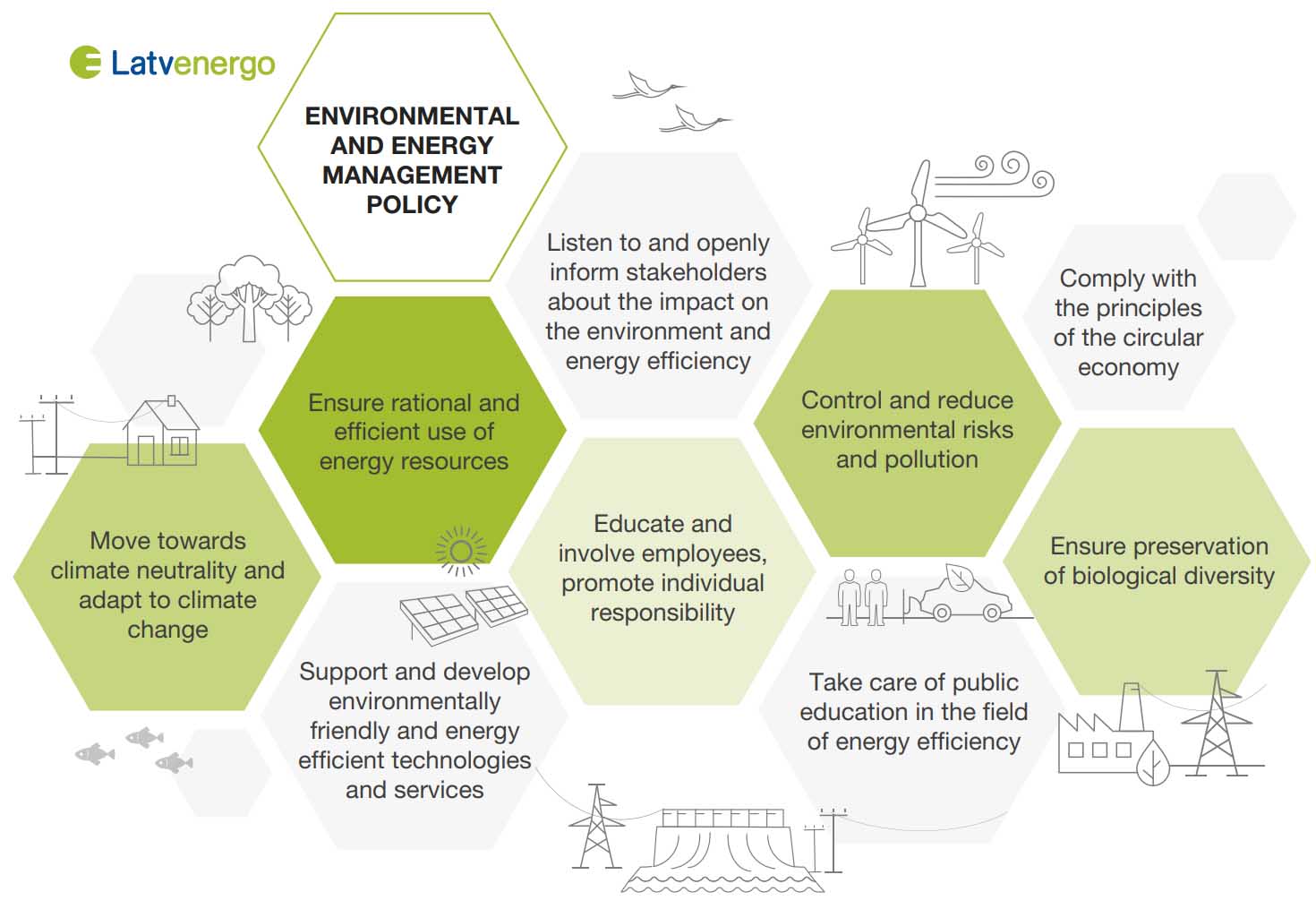
The Group organises its activities and plans its development based on the objectives of the UN 2030 Agenda for Sustainable Development and the European Green Deal, complying with external and internal legislation in the fields of energy management, environmental and nature protection, as well as identifying and respecting the needs of customers, affected communities and other stakeholders.
Latvenergo Group’s ability to continuously improve its environmental performance is confirmed by a certified ISO 14001-compliant environmental management system and an ISO 50001-compliant energy management system.
Climate
The Group is committed to achieving climate neutrality by 2050, supporting the Paris Agreement’s goal of limiting global warming. The Group’s transition strategy focuses on three main areas: decarbonisation, development of RES, and improvements in energy efficiency. Latvenergo Group has set two important climate targets:
- in the medium term, to reduce its direct GHG emissions by 47% (compared to 2021) by 2030 while increasing the share of RES in electricity generation to 80%
- in the long term, an ambitious goal of achieving climate neutrality in electricity generation by 2040; to attain it, active research is taking place in the area of CHPP decarbonisation solutions, with assessments of other technological options to reduce emissions
The GHG emissions reduction target indicators were developed with consideration of the EU Green Deal goals and the 2021–2030 Latvian National Energy and Climate Plan into account. The target indicators were set based on the International Energy Agency’s (IEA) Net Zero Emissions by 2050 scenario and the energy sector decarbonisation roadmap.
The assessment of Latvenergo Group’s GHG emissions was conducted in accordance with the requirements of ISO 14064-1 and the GHG Protocol Corporate Accounting and Reporting Standard.
Latvenergo Group GHG emissions
|
|
Units | Target for 2030 | 2020 | 2021 | 2022 | 2023 | 2024 |
| Scope 1 emissions | thousand t | - 47%* | 860 | 928 | 673 | 717 | 780 |
| From Combustion plants | thousand t |
|
852 | 920 | 665 | 708 | 772 |
| From fuel for transportation and machinery | thousand t |
|
8 | 8 | 8 | 8 | 8 |
| Leaks of flourinated GHGs | thousand t |
|
0 | 0 | 0 | 0.4 | 0.4 |
| Scope 2 emissions (market -based) | thousand t |
|
|
76 | 117 | 107 | 114 |
| From generation of purchased electricity | thousand t |
|
- | 7 | 6 | 9 | 8 |
| From generation of purchased thermal energy | thousand t |
|
- | 1 | 1 | 0.7 | 0.5 |
| From electricity distribution losses | thousand t |
|
- | 69 | 110 | 98 | 106 |
| Scope 3 emissions (location -based) | thousand t |
|
|
62 | 32 | 39 | 36 |
| From generation of purchased electricity | thousand t |
|
- | 5 | 0 | 10 | 9 |
| From generation of purchased thermal energy | thousand t |
|
- | 1 | 1 | 0.7 | 0.5 |
| From electricity distribution losses | thousand t |
|
- | 56 | 31 | 27 | 27 |
| Scope 3 emissions | thousand t |
|
|
|
2,731 | 3,002 | 3,413 |
| GHG Protocol Category 1 | thousand t |
|
- | - | 52 | 73 | 123 |
| GHG Protocol Category2 | thousand t |
|
- | - | 6 | 14 | 16 |
| GHG Protocol Category 3 | thousand t |
|
- | - | 2,487 | 2,628 | 3,034 |
| GHG Protocol Category 11 | thousand t |
|
- | - | 185 | 179 | 236 |
By committing to climate neutrality, Latvenergo will contribute to global efforts to reduce emissions and mitigate the impacts of climate change. Moving towards climate neutrality is an important factor in the company’s sustainable development path, contributing not only to environmental protection and risk reduction but also to its reputation and long-term development.
Reduce direct CO2 emissions by 2030*
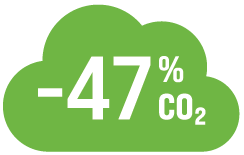
Performance indicator: <500 000 t per year (*compared to 2021)
Increase the share of electricity generated from renewable sources by 2030
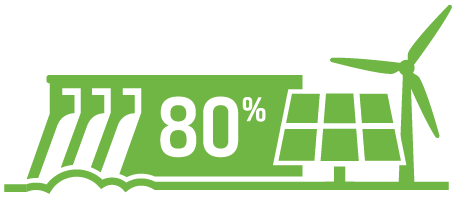
Performance indicator: 80% electricity generated from RES
Reduce indirect (Scope 3) CO2 emissions from electricity trade**
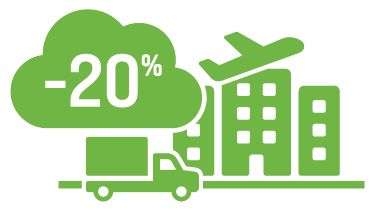
Performance indicator: 20% less CO2 in 2030 (**compared to 2022)
Achieve climate neutrality in electricity generation by 2040
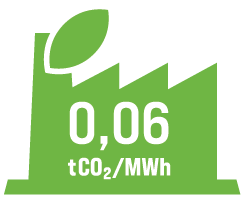
Performance indicator: 0,06 t CO2/MWh generated electricity in 2030
Performance in 2024
- Scope 1 GHG emissions: -16% compared to 2021
- GHG emissions from electricity retail sales: 2,744 thousand tCO2 or +23% compared to 2022
- The share of green electricty in retail sales: 9%
- The share of RES in energy generation: 66%
Environmental information
Emissions of air pollutants into the atmosphere directly depend on the amount of energy produced, the fuel used, the efficiency of its use and the type of technology.
- Natural gas is used by Latvenergo AS CHPPs and by some of the production facilities in Liepāja. When natural gas burns, nitrogen oxides (NOx) and carbon monoxide (CO) are released into the atmosphere.
- CHPPs of Latvenergo AS use diesel as an emergency fuel. In the heating season of 2022/2023, diesel was also used as an alternative fuel to natural gas at the CHPPs in the context of the energy crisis. In addition to NOx and CO, its combustion also releases sulphur dioxide (SO2) and particulate matter into the atmosphere. Hydrocarbon emissions occur during the storage of diesel fuel.
- The use of wood as a fuel in the Liepaja plants means the emission of NOx, CO and particulate matter.
NOx, CO, SO2 and other emissions
|
|
Units
|
Target for 2030
|
2020
|
2021
|
2022
|
2023
|
2024
|
|
NOx
|
t
|
|
648 | 686
|
374
|
534 |
512
|
|
NOx from combustion plants
|
kg/MWh
|
|
0.19 | 0.15 | 0.13 | 0.17 |
0.15
|
|
NOx for the Group combined
|
kg/MWh
|
0,03
|
0.11 | 0.10 | 0.07 | 0.08 |
0.08
|
|
CO
|
t
|
|
319 | 363
|
231
|
358 |
333
|
|
CO ombustion plants
|
kg/MWh
|
|
0.09 | 0.08 | 0.08 | 0.12 |
0.10
|
|
CO for the Group combined
|
kg/MWh
|
0,02
|
0.05 | 0.05 | 0.04 | 0.05 |
0.05
|
|
SO2
|
t
|
|
5 |
5
|
25 | 14 |
6
|
|
Other*
|
t
|
|
15 | 19 | 23 | 23 |
25
|
*incl. emissions of solid particulate matter and hydrocarbons
The amount of emissions per unit of energy generated, or specific emissions, is influenced by the efficiency of the energy generation processes and technical solutions used to reduce pollutant emissions. The Group continues the development of RES generation capacity (wind and solar power plants) and increase the efficiency of existing power plants and maximum use of RES.
|
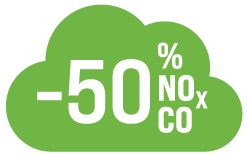
Reduce air emissions by 2030
|
Reduce pollution
|
 |
 |
| Performance indicator: 47% less NOx and CO per unit of energy generated
*compared to 2022 |
Performance indicator: 0 significant cases |
The Group uses water resources mainly for the provision of production processes, as well as in small quantities for other economic needs and for the water supply to external consumers. In accordance with the Water Resources Atlas of the World Resources Institute, Latvia is in a low to low-medium water stress zone, therefore, there are no specific water consumption restrictions. The amount of surface and/or groundwater consumption is specified in the permits of each facility. The Group's water consumption balance includes surface water, groundwater, and tap water.
By developing RES generation and implementing water-saving measures to the extent technically feasible, Latvenergo will significantly reduce water consumption per unit of energy generated.
Latvenergo’s Daugava HPPs reservoirs are classified as heavily modified water bodies with limited possibilities to improve their quality; however, Latvenergo is implementing biodiversity conservation activities which have an impact on the quality of water bodies and are included in the management plan of Daugava River Basin.
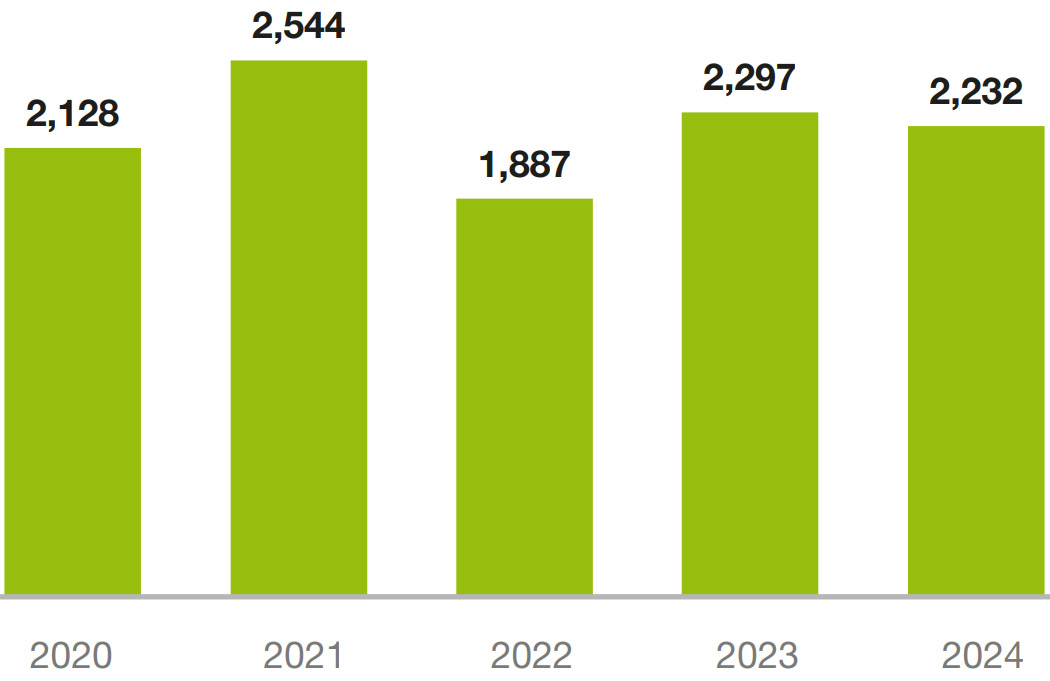
Water consumption in 2024 (thousand m3):
Specific water consumption in 2024 (m3 /MWhel)
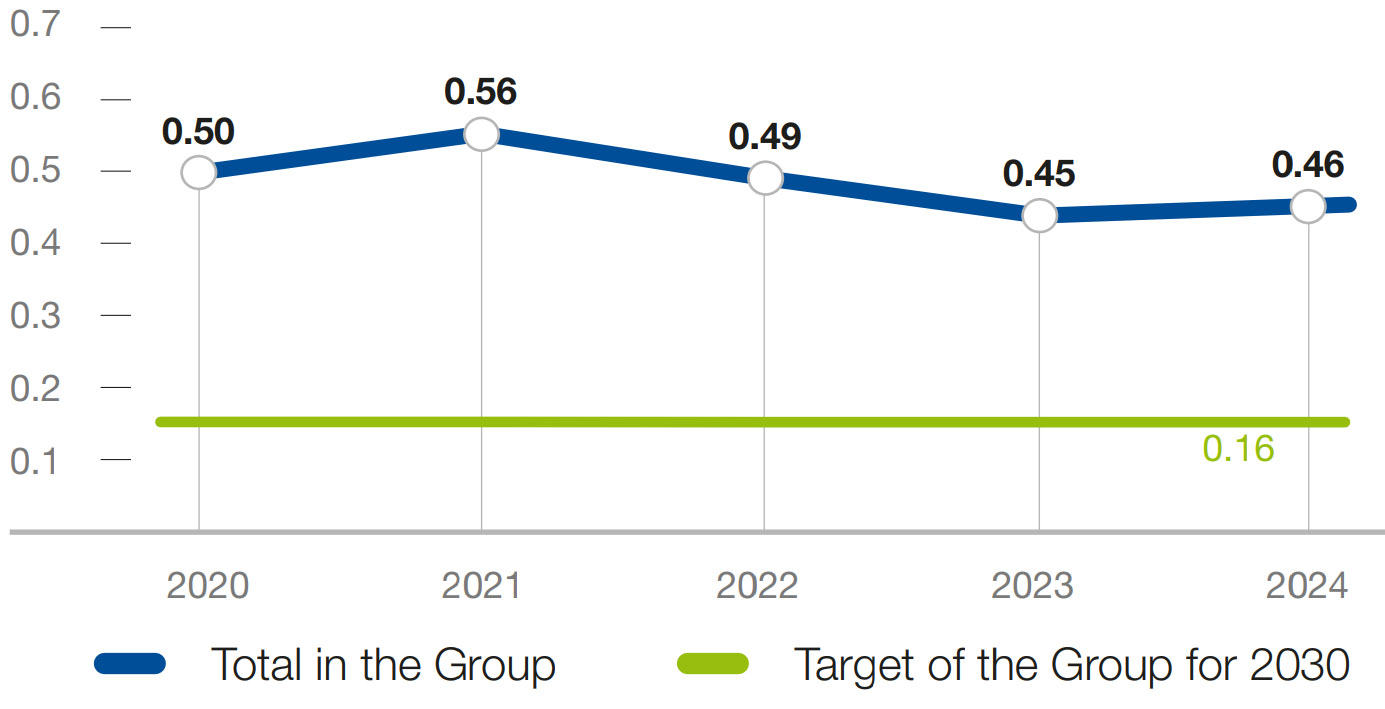
Water consumption
|
Indicator |
Unit |
2021 |
2022 |
2023 |
2024 |
|
Water withdrawal |
thousand m³ |
2544 |
1887 |
2297 |
2232 |
|
Water discharge |
thousand m³ |
1672 |
1181 |
1747 |
1624 |
|
Total net water consumption |
thousand m³ |
872 |
706 |
550 |
608 |
Reduce water consumption
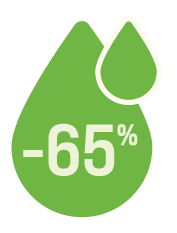
Performance indicator: 65% less per unit of energy generated
*compared to 2022
Latvenergo Group promotes efficient use of energy resources by recording and analysing the flow of energy consumption, identifying essential energy consumption for ensuring production and economic processes and implementing measures to reduce energy consumption.
The Group has a balanced and environmentally friendly energy generation portfolio, consisting mostly of hydropower plants and highly efficient combined heat and power plants. In 2024, 53% of energy was generated from RES.
Latvenergo Group's direct energy consumption covers all forms of energy use, including those that contribute to Scope 1 GHG emissions. This includes all fuels used in the Group’s CHPPs and boiler houses, as well as other energy sources: petrol and diesel fuel. Indirect energy consumption consists of the Group’s heat and electricity consumption.
Special attention is paid to issues related to waste reduction and appropriate waste management by evaluating possibilities of reuse, regeneration and recycling. The Group has introduced measures and technologies that help reduce waste at the source. Processes are improved and resource use is optimised to reduce consumption of materials and energy resources, thus reducing the generation of waste and promoting its reuse.
Latvenergo Group has made a commitment to promote the durability, reuse and recycling of equipment and materials at the end of their life cycle during RES projects.
Energy produced
|
|
Units | 2023 | 2024 | Changes |
| Energy produced from renewable energy sources | % | 58 | 53 | -5% |
| Water | % | 55 | 48 |
|
| Wind | % | <0.1 | <0.1 |
|
| Sun | % | <0.1 | 0.7 |
|
| Wood materials
|
% | 3 | 4 |
|
| Energy produced from fossil energy sources | % | 42 | 48 | 5% |
| Natural gas
|
% | 41 | 48 |
|
| Diesel fuel (including small amounts of coal and LPG)
|
% | 0.9 | <0.1 |
|
| Electricity generated
|
GWh | 5,134 | 4,842 | -6% |
| From renewable energy sources
|
% | 73 | 66 | -7% |
| From non-renewable energy sources
|
% | 13 | 34 | 21% |
| Heating energy produced
|
GWh | 1,706 | 1,671 | -2% |
| From renewable energy sources
|
% | 12 | 13 | 0.3% |
| From non-renewable energy sources
|
% | 88 | 87 | -0.3% |
Energy consumption and energy source structure
|
|
Units | 2023 | 2024 | Changes |
| Total energy consumption, fossil energy sources
|
MWh | 3,714,990 | 4,077,570 | 10% |
| Fuel consumption from natural gas
|
MWh
|
3,459,468
|
3,859,343
|
|
| Fuel consumption from petroleum products
|
MWh
|
62,178
|
143 |
|
| Fuel consumption from coal and coal products
|
MWh
|
51 | 0 |
|
| Consumption of fuel for vehicles and machinery
|
MWh
|
31,489
|
28,424
|
|
| including diesel fuel consumption
|
MWh
|
27,294
|
24,963
|
|
| including petrol consumption
|
MWh
|
4,195
|
3,462
|
|
| Consumption of purchased fossil fuel electricity
|
MWh
|
158,513
|
186,062
|
|
| Consumption of purchased fossil fuel thermal energy
|
MWh
|
3,291
|
3,598
|
|
| Energy consumption, nuclear energy sources*
|
MWh
|
37,076
|
23,314
|
-37% |
| Total energy consumption, renewable energy sources
|
MWh
|
364,272
|
364,160
|
0% |
| Fuel consumption from renewable energy sources
|
MWh
|
264,802
|
270,720
|
|
| Consumption of purchased renewable energy electricity
|
MWh
|
95,910
|
89,579
|
|
| Consumption of purchased renewable thermal energy
|
MWh
|
3,561
|
3,860
|
|
| Total energy consumption
|
MWh
|
4,116,339
|
4,465,044
|
8% |
| Share of fossil energy resources in total energy consumption
|
% | 90
|
91
|
|
| Share of nuclear energy in total energy consumption
|
% | 0.9 | 0.5
|
|
| Share of renewable energy resources in total energy consumption
|
% | 8.9 | 8.2
|
|
| Energy intensity**
|
MWh/EUR
|
0.0020 | 0.0026
|
30% |
* Consumption as the share of nuclear power in uncertified electricity
**Total energy consumption per net income
Develop renewable energy technologies by promoting a circular economy
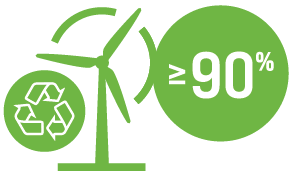
Performance indicator: more than 90% recycable materials in new wind turbines
Latvenergo Group takes care of biodiversity conservation by assessing the impact of existing and planned activities on biodiversity and by implementing statutory and voluntary measures to reduce the impact on specially protected nature areas, species and habitats.
Overhead and cable power lines located in specially protected areas or micro-reserves stretch for 6,500 km and cover an area of 4,700 ha, or 0.05% of the total area of power lines. Construction and maintenance of power lines shall be carried out by Sadales tīkls AS in compliance with the laws and regulations governing the protection and use of specially protected nature areas, ensuring the preservation of nature values and preventing a significant negative impact on these territories.
Other Latvenergo Group facilities, as well as the sites of planned activities (WPPs, SPPs, electricity charging stations) that are owned or leased by the Group, or sites where development rights have been acquired by the Group, are located outside areas with high biodiversity value.
To reduce the impact of its operations on biodiversity, the Group makes annual payments for the restoration of fish resources in the River Daugava Basin in accordance with the requirements of regulatory enactments. In 2023, approximately 1.5 million juveniles of salmon, sea trout, pikeperch and vimba, and 6.9 million lamprey larvae were released into the rivers. In addition, the Group also implements other projects to improve fish habitats and migration, e.g., placing artificial fish spawning nests in the River Daugava and cleaning small rivers in the Daugava River Basin. In 2023, as many as 450 artificial fish spawning nests were installed in the River Daugava and monitored with underwater cameras.
The most significant potential impact on biodiversity of the Group’s investment projects relates to the development of WPPs. In order to ensure that the negative impacts of the planned WPP projects are balanced, the activities are planned in close cooperation with nature experts, as well as nature and environmental institutions.
|
Reduce the impact of the HPPs on biodiversity
|
Reduce the impact of investment projects on nature
|
 |
 |
| Performance indicator: 25 km improved ecolocigal quality of rivers in the Daugava basin | Performance indicator: Plant an equivalent number of new trees during deforestation for WPP projects |
Based on the requirements of the Water Management Law (2002) and Cabinet Regulation No. 736 of 23 December 2003 “Regulations Regarding a Permit for the Use of Water Resources”, all Daugava hydropower plants have been issued Permits for the Use of Water Resources, which set out the conditions for the use of water resources that must be met while operating hydropower plants.
The State Environmental Service has issued permits for the performance of a Category A polluting activity for the operation of Latvenergo AS combined heat and power plants.
Permits issued by Latvenergo AS are available in the Public Data Register of the State Environmental Service.